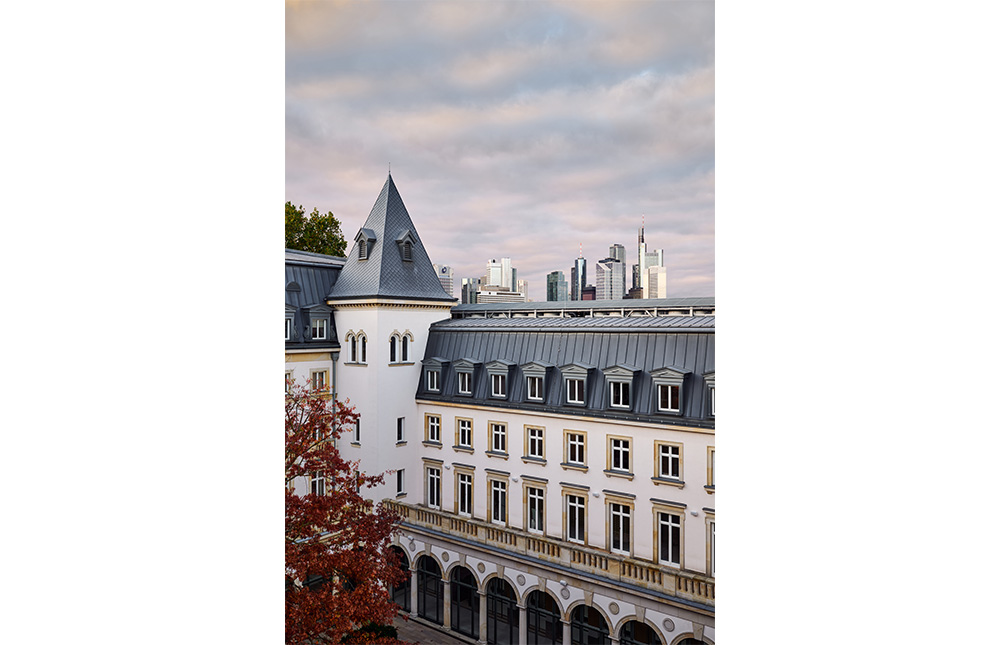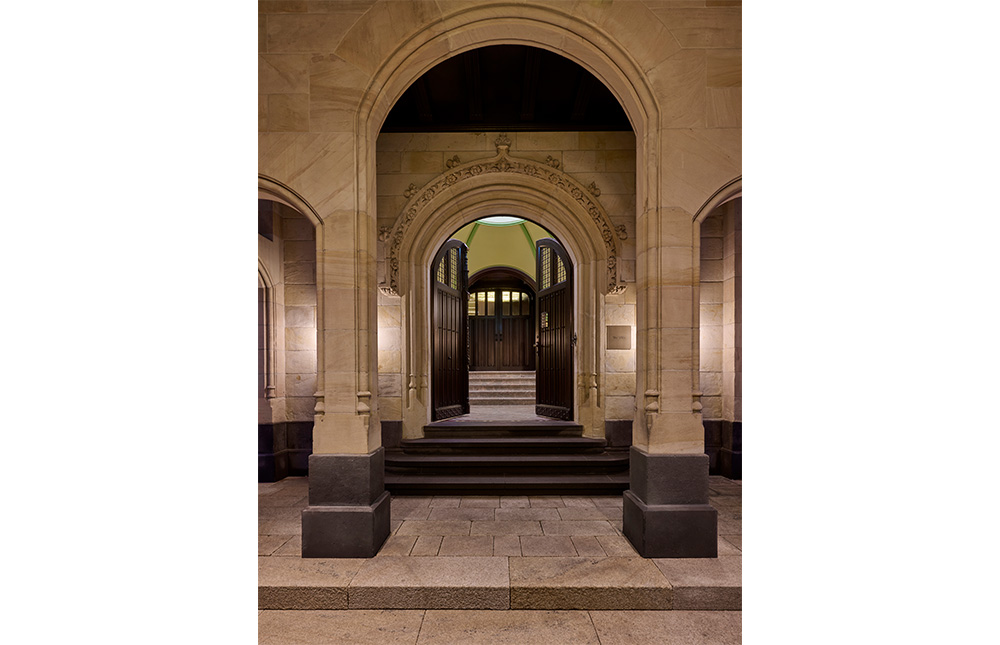

Frankfurt, Germany’s upscale Sachsenhausen district is a reprieve from the skyscrapers defining the financial hub. In this leafy pocket close to the museums lining the Main River, the labyrinthine Florentin hotel, part of the Althoff Collection of hotels, beckons with its centerpiece villa dating from 1901.
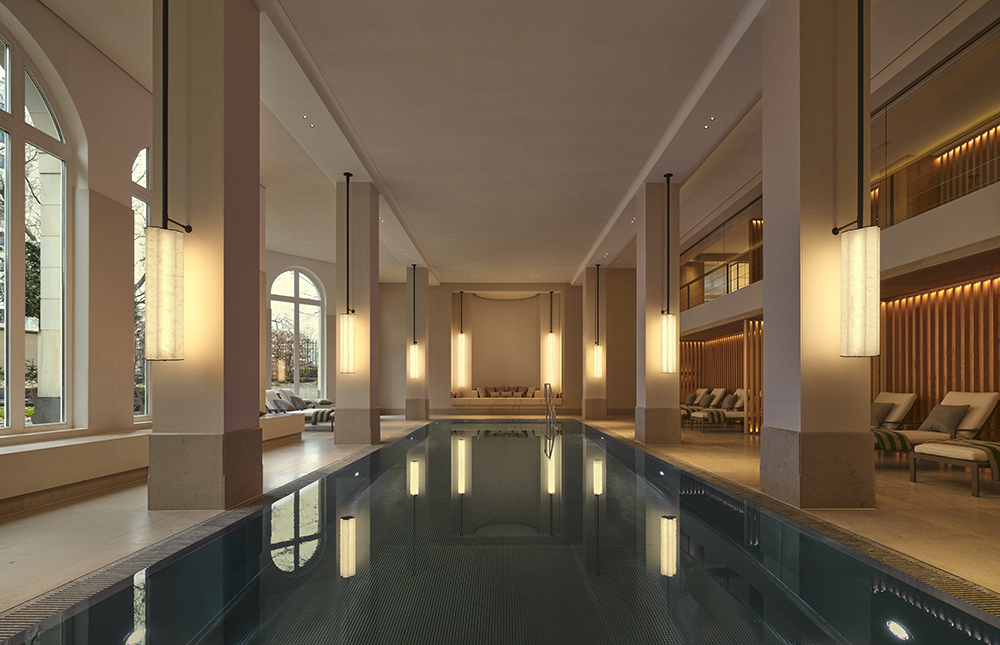
Designed by Alfred Günther for banker Eduard Beit von Speyer, the splendid Gothic- and Renaissance-style mansion deftly fuses with the vast modern extension first introduced in the mid-2000s, when the entire property opened as Rocco Forte’s Villa Kennedy. Today, following a multimillion-dollar revamp of the complex, the 147-key Florentin has transformed into an elegantly understated urban sanctuary, complete with a spa featuring an indoor pool, garden, and a cozy cluster of mezzanine loungers.
“With respect to the ornate structure on the outside, we wanted to create calmness on the inside. Restraint over excess was our approach,” explains Benjamin Smestad, partner at Singapore-based design studio Unscripted.
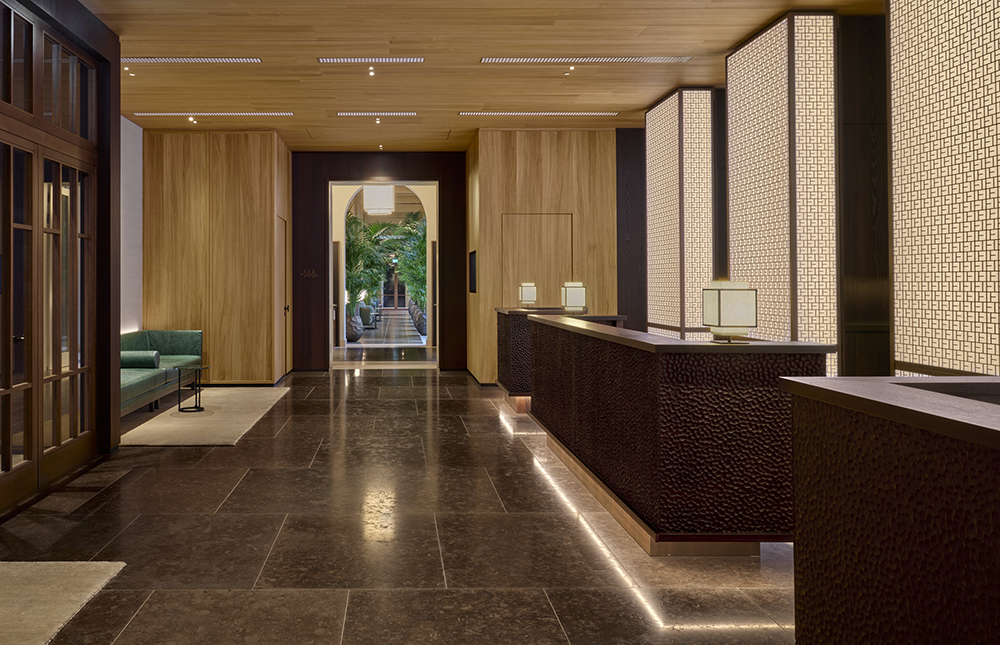
This translated to a “deliberately subdued” atmosphere upon arrival, as Smestad puts it, with softly glowing light boxes backdropping the reception desk. The lobby leads guests onto a palm-lined passage looking onto the expansive courtyard, “a point of orientation that is visible from most areas. We consider this the heart and soul of the hotel, where the outdoor landscape connects with the indoor spaces and natural light filters through the pathways into the Garden restaurant and the Florentin Bar. It’s magical.”
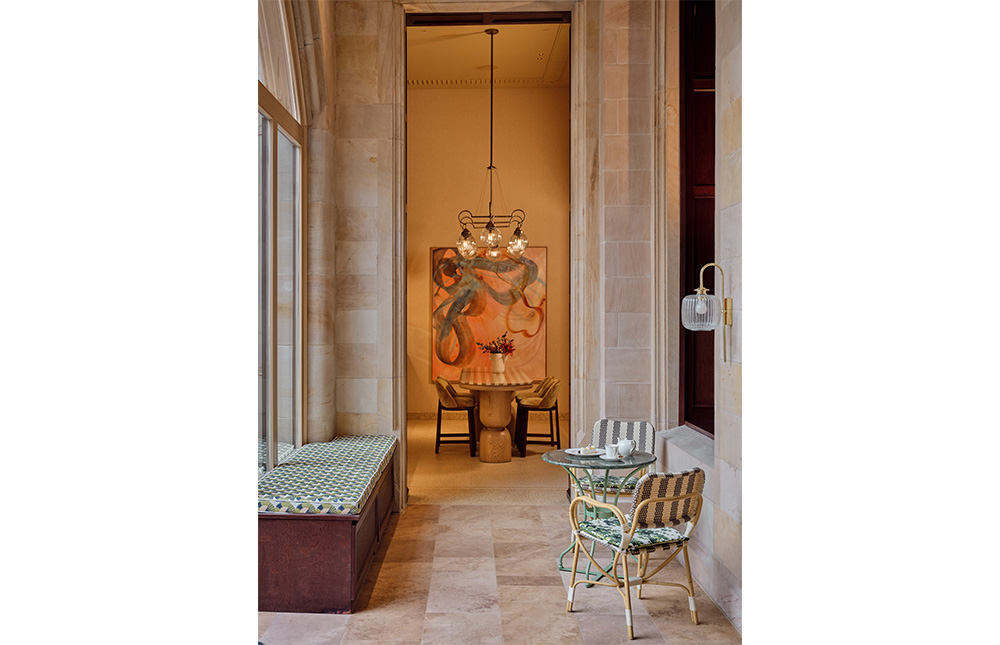
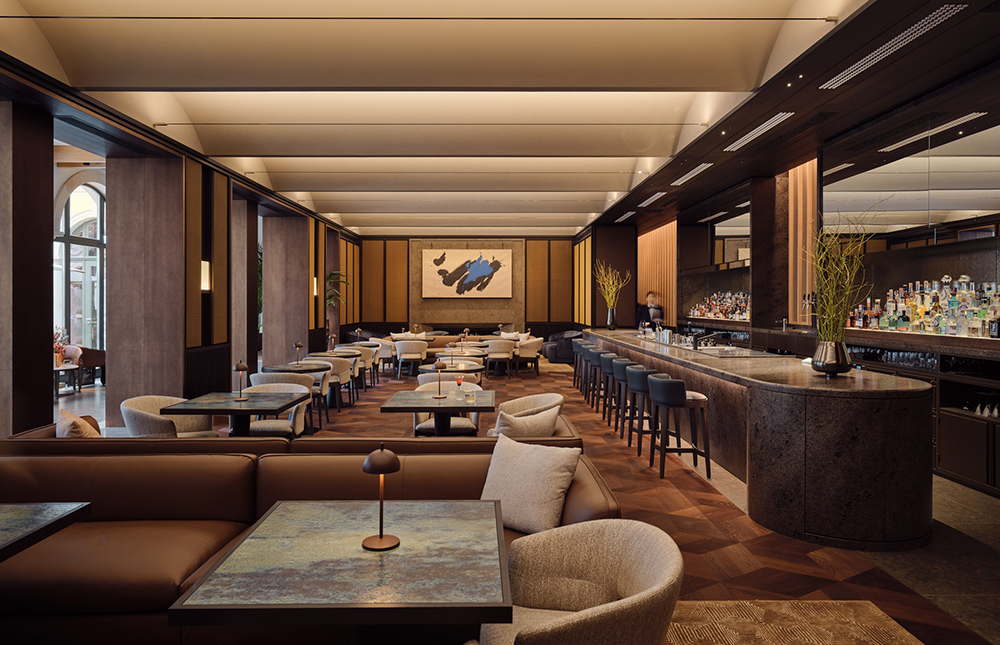
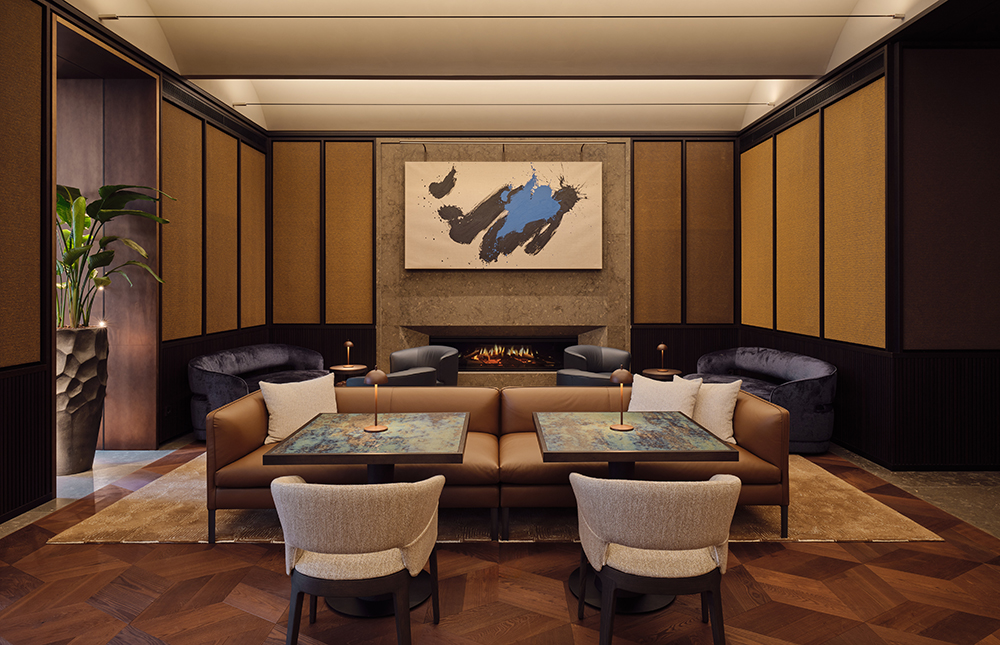
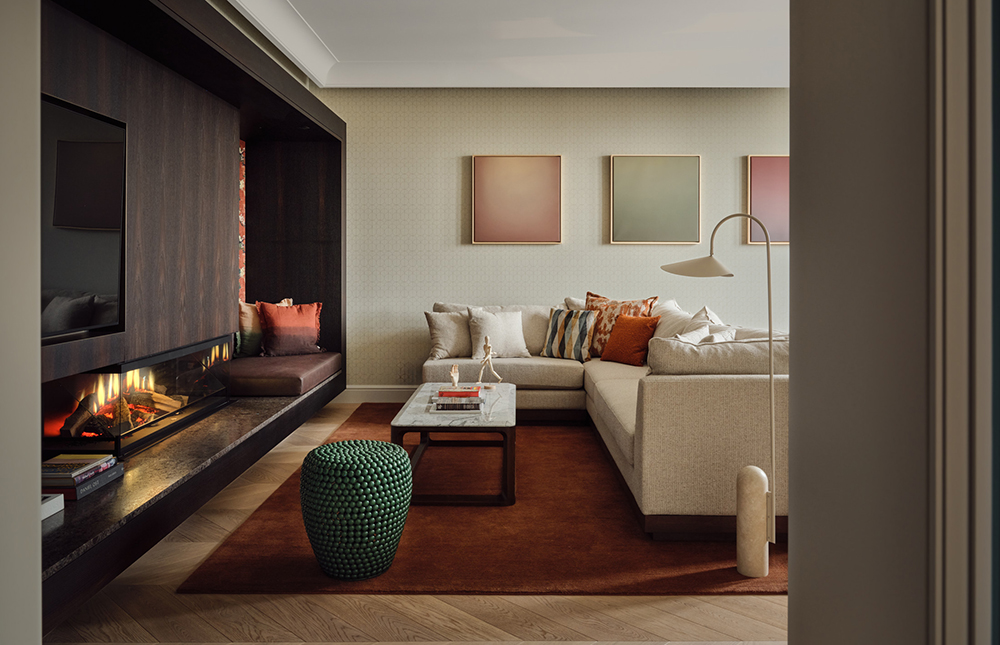
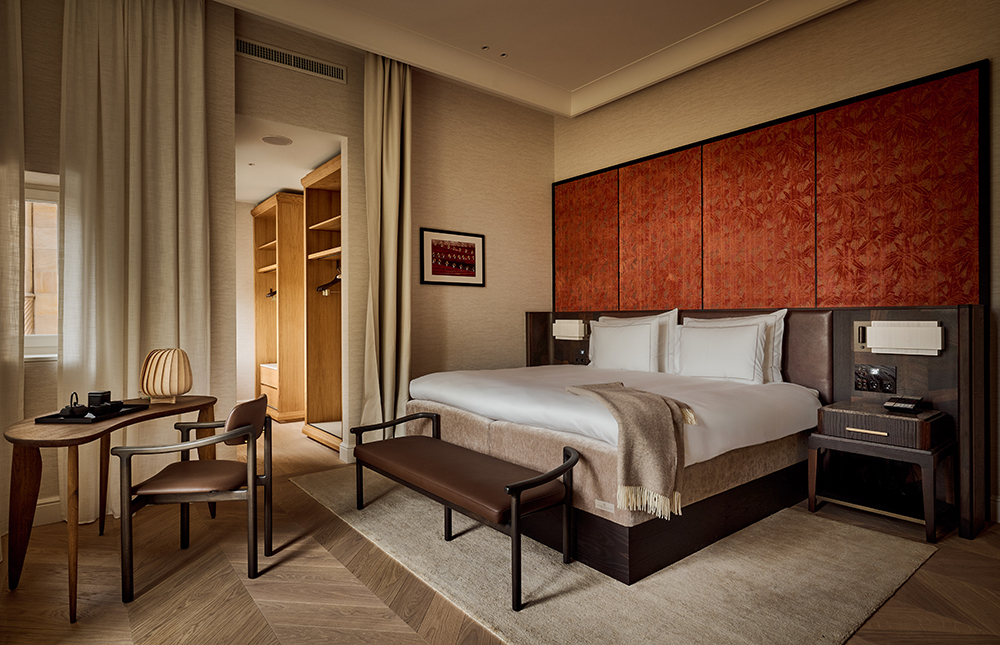
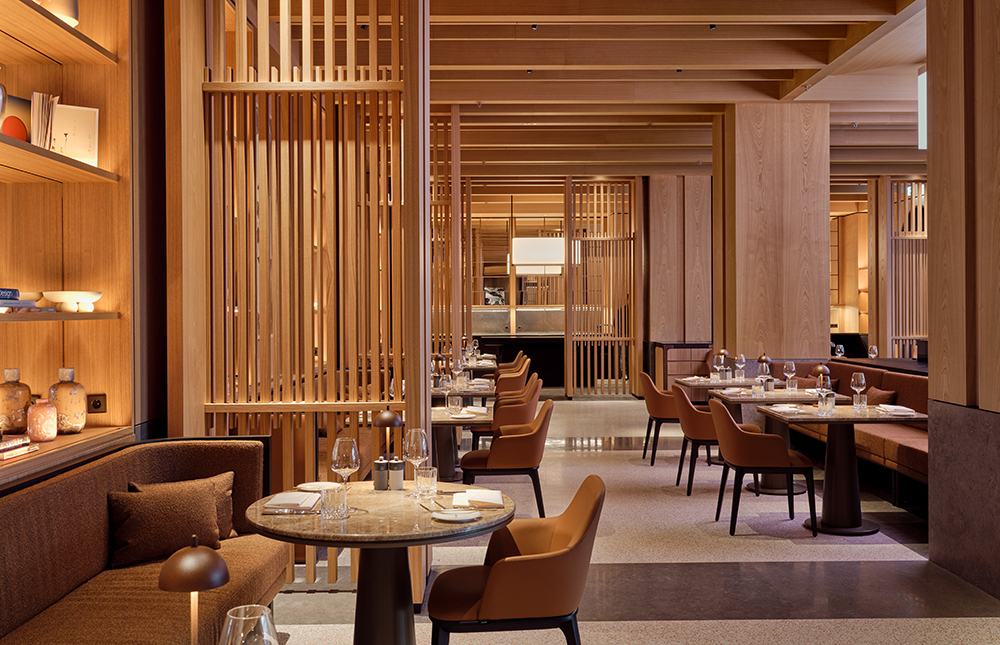
Throughout, Unscripted embraced an East-meets-West philosophy, conveying concepts like serenity, minimalism, and harmony through such materials as leather, paper, terrazzo, and mirror. Most prominently featured in both public areas and guestrooms is durable, sustainable chestnut wood. Marble is also used in abundance, while textured glass, decorative screens, bronze accents, and tactile fabrics subtly recall Asia.
Although the ash floor-adorned guestrooms, including the coveted Loft Terrace suites, are sleek and timeless, the signature suites housed in the heritage villa have a decidedly more cinematic air. Consider the Jazz Musician, for which Unscripted wove in upbeat patterns, or the artifact-filled Explorer.
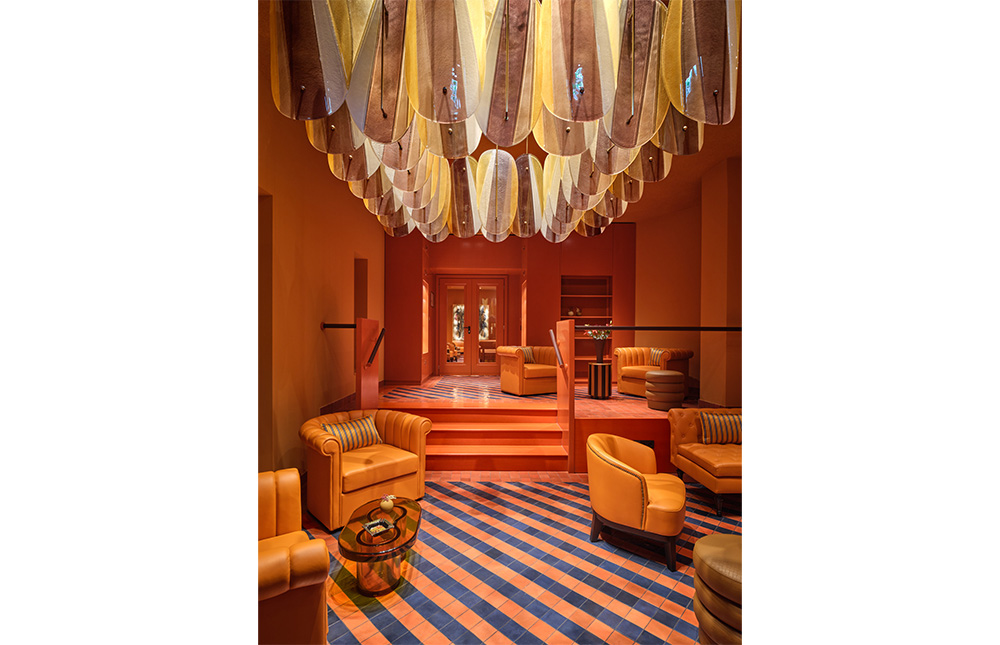
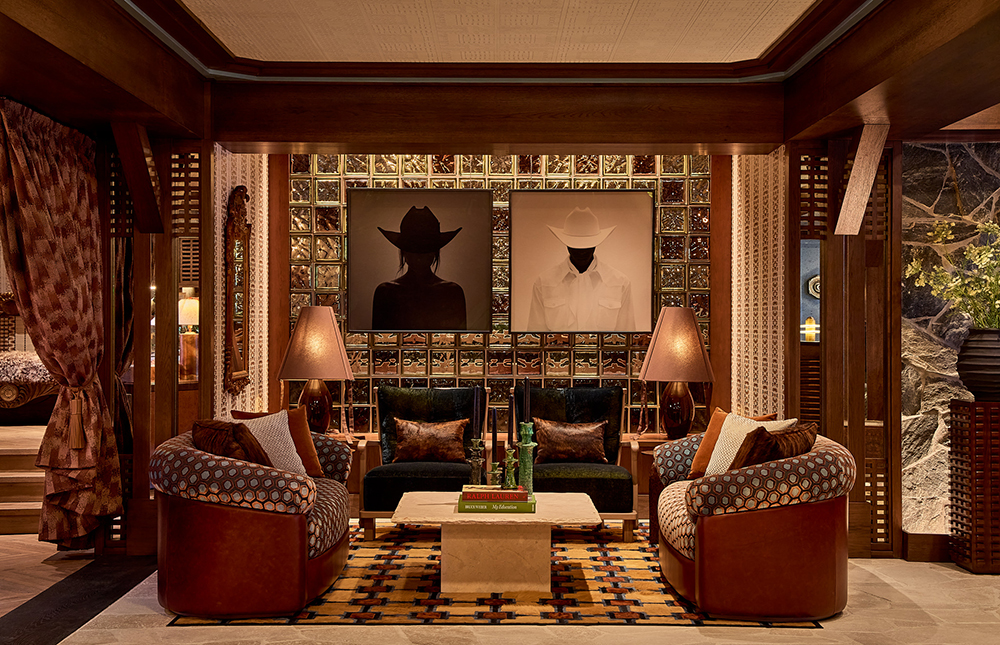
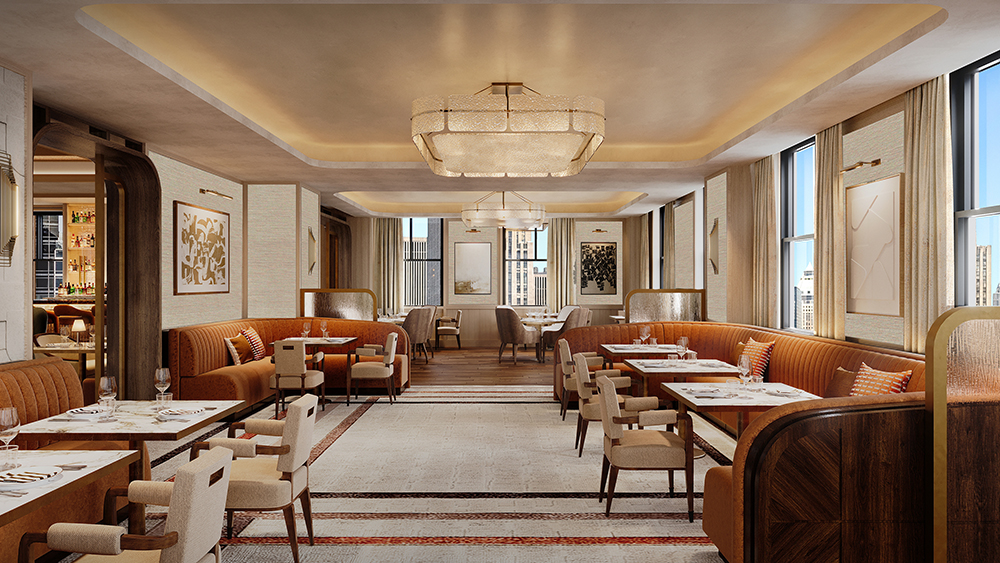
Beyond the earth-toned Florentin Bar and all-day Garden buoyed by floor-to-ceiling glass, there’s a vivid orange-hued cigar lounge and the Dune, chef Niclas Nussbaumer’s unfussy fine dining experience complemented by travertine, undulating banquettes, and a striking ceiling installation that mimics a starry sky.
Both spaces are the handiwork of Atelier Zürich, the Swiss design practice responsible for overhauling the villa’s public salons. Partner and studio director Sabine Herzog says the team was keen to reimagine the residence “as a contemporary icon with a strong and recognizable identity while preserving its original spirit as a family home.”
To ensure this duality, highlights like the staircase, tiles, stucco motifs, and vaulted and ornamental wood ceilings were carefully restored. Rather than treating them as relics from the past, Atelier Zürich actively engaged with them, reinterpreting their language. “For example, new lighting draws from the geometry of the timber structure, and contemporary color palettes are developed directly from historic surfaces, allowing old and new to coexist in a cohesive and layered way,” Herzog elaborates.
In the entrance hall, a floral wallcovering informed by early 20th-century design paves the way to such dynamic spaces as the introspective Blue Salon, distinguished by a Murano chandelier and lacquered dining table, as well as the Winter Garden melding lush plantings with a botanical-print ceiling. It reinforces Beit von Spayer’s early vision for the villa as an “escape into nature by dissolving the boundary between indoors and outdoors,” Herzog points out. Even the sunny kitchen, formerly relegated to the back of the house, has been given new life as a golden-tinted social hub that “stands out as a more intimate and inviting moment.”